
Blogs
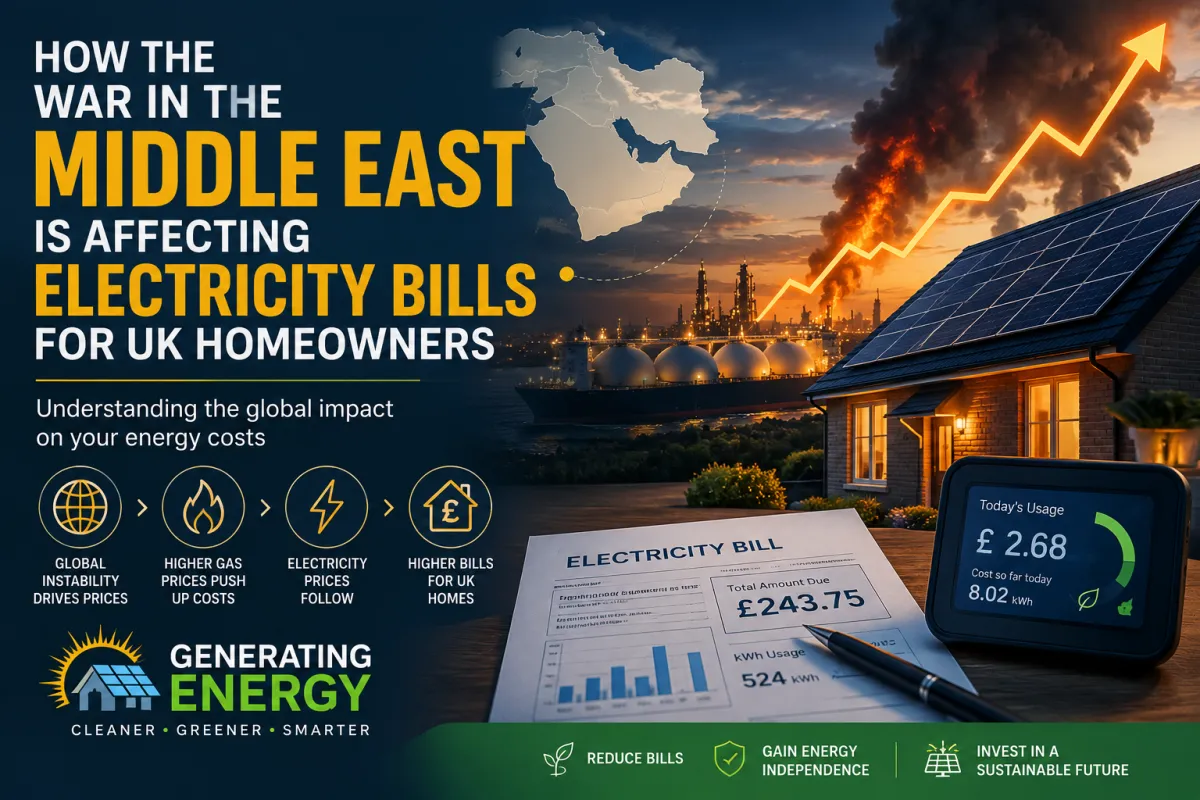
How the War in the Middle East Is Affecting UK Electricity Bills (2026 Guide)
Solar Information - Generating Energy
How the War in the Middle East Is Affecting UK Electricity Bills (2026 Guide)
Introduction: Why Your Electricity Bill Is Still Rising
If you’re a homeowner in Liverpool or anywhere in the UK, you’ve likely noticed one thing over the past few years energy bills remain high and unpredictable.
Even when headlines suggest energy markets are stabilising, prices at home often tell a different story.
One of the biggest ongoing influences is geopolitical instability in the Middle East, which continues to affect global oil and gas markets. While the UK is not directly involved in these conflicts, our energy prices are heavily tied to them.
This guide explains exactly how and why this happens and what you can do to protect your home from future price spikes.
How Middle East Conflict Impacts UK Energy Prices
The Middle East plays a critical role in global energy supply. It holds some of the world’s largest oil and gas reserves and controls key shipping routes such as the Strait of Hormuz, through which a significant portion of global energy exports pass.
When conflict or instability increases in the region:
Oil prices rise due to supply risk
Liquefied natural gas (LNG) prices increase globally
Energy traders build “risk premiums” into future pricing
Wholesale energy markets become more volatile
Even if supply is not immediately disrupted, markets react instantly to uncertainty.
This is why UK energy prices can rise even when nothing has physically changed at home.
Why UK Electricity Prices Are Linked to Gas
One of the most important things homeowners need to understand is this:
In the UK, electricity prices are still largely set by gas.
This happens through something called marginal pricing.
How it works:
Electricity is generated from multiple sources (wind, solar, nuclear, gas)
The most expensive generator needed at any time sets the price
Gas-fired power stations are often the most expensive
Therefore, gas effectively sets the market price
So even if your home uses no gas at all, your electricity bill is still affected by gas prices.
This is the key reason why conflict in gas-producing regions has such a strong impact on UK households.
The Chain Reaction: From War to Your Energy Bill
Here’s how a conflict in the Middle East translates into higher bills in the UK:
1. Geopolitical tension increases
Markets react to uncertainty in oil and gas supply routes.
2. Global gas prices rise
LNG traders increase prices due to perceived risk.
3. UK wholesale electricity prices increase
Because gas sets the marginal price.
4. Energy suppliers adjust tariffs
Forward contracts become more expensive.
5. Household bills increase
Through the Ofgem price cap or fixed tariff renewals.
This entire chain can happen within days in global markets—but takes weeks or months to fully reach household bills.
Why UK Bills Don’t Change Immediately
In the UK, energy bills are regulated through the Ofgem energy price cap, which updates every three months.
This means:
Global price spikes don’t hit instantly
Costs are averaged over time
Changes appear with a delay of 1–3 months
However, this delay does not prevent increases—it only spreads them out.
If wholesale prices stay high due to ongoing geopolitical instability, UK households will eventually feel the impact.
Why 2026 Energy Prices Remain Volatile
Even outside of immediate conflict spikes, several structural issues keep UK energy prices sensitive:
Ongoing geopolitical risk in oil and gas-producing regions
High global demand for LNG, especially from Asia
Limited spare gas production capacity worldwide
Continued reliance on gas for electricity generation
Transition to renewables still underway
While the UK has made progress in renewable energy expansion, gas still plays a central role in stabilising the grid.
This means UK prices remain exposed to international shocks.
Why This Matters for Homeowners in Liverpool and the Northwest
For households in Liverpool and across the Northwest, this volatility creates real financial pressure:
Higher monthly direct debit payments
Uncertainty around winter energy costs
More expensive fixed-rate contracts
Increased pressure on household budgets
Energy is no longer a predictable utility cost it is now a variable global market expense.
Can Renewables Reduce the Impact?
Yes, but not instantly.
Renewable energy such as solar and wind is helping the UK reduce long-term reliance on gas. However:
Gas still backs up the grid when renewable output is low
Energy storage capacity is still developing
National infrastructure upgrades take time
This means gas still sets electricity prices for now.
However, households that invest in solar energy can significantly reduce exposure to these global fluctuations.
How Solar Energy Protects You From Rising Bills
One of the most effective long-term solutions for homeowners is solar photovoltaic (PV) systems combined with battery storage.
Benefits include:
Reduced reliance on the national grid
Protection from wholesale energy price spikes
Lower long-term electricity costs
Ability to store and use your own energy
Greater energy independence
When electricity prices rise due to global events, solar homeowners are far less affected because they generate their own power.
This is especially relevant in the UK’s current volatile energy market.
What Homeowners Can Do Now
Even if you’re not ready to install solar immediately, there are steps you can take:
Short-term actions:
Monitor your energy usage with smart meters
Avoid unnecessary high-usage peak times
Review tariff options before price cap changes
Long-term actions:
Improve home insulation
Upgrade heating systems
Consider solar PV installation
Add battery storage for maximum savings
Energy efficiency combined with self-generation is the strongest protection against future price increases.
How Generating Energy Helps Homeowners Take Control
At Generating Energy, we help homeowners across Liverpool and Northwest England reduce their dependence on unpredictable energy markets.
We specialise in:
Solar panel installations
Battery storage systems
EV charging solutions
Energy-efficient system design
Our goal is simple:
help households take control of their energy instead of reacting to global price changes.
As energy markets become more volatile due to geopolitical events, more homeowners are choosing to generate and store their own electricity.
Conclusion: Global Conflict, Local Impact
The war in the Middle East may feel distant, but its impact reaches directly into UK homes through energy pricing.
Because electricity prices are still closely tied to global gas markets, geopolitical instability continues to influence what homeowners pay each month.
While the UK transitions toward renewable energy, this connection will not disappear overnight.
For now, the most effective way to protect yourself is to reduce reliance on the grid—and increasingly, that means investing in solar energy and storage.
Take the Next Step
If rising energy bills are affecting your household, Generating Energy can help you explore practical long-term solutions.
Whether you’re considering solar panels, battery storage, or a full energy upgrade, our team can design a system tailored to your home and usage.
How the War in the Middle East Is Affecting UK Electricity Bills (2026 Guide)
Solar Information - Generating Energy
How the War in the Middle East Is Affecting UK Electricity Bills (2026 Guide)
Introduction: Why Your Electricity Bill Is Still Rising
If you’re a homeowner in Liverpool or anywhere in the UK, you’ve likely noticed one thing over the past few years energy bills remain high and unpredictable.
Even when headlines suggest energy markets are stabilising, prices at home often tell a different story.
One of the biggest ongoing influences is geopolitical instability in the Middle East, which continues to affect global oil and gas markets. While the UK is not directly involved in these conflicts, our energy prices are heavily tied to them.
This guide explains exactly how and why this happens and what you can do to protect your home from future price spikes.
How Middle East Conflict Impacts UK Energy Prices
The Middle East plays a critical role in global energy supply. It holds some of the world’s largest oil and gas reserves and controls key shipping routes such as the Strait of Hormuz, through which a significant portion of global energy exports pass.
When conflict or instability increases in the region:
Oil prices rise due to supply risk
Liquefied natural gas (LNG) prices increase globally
Energy traders build “risk premiums” into future pricing
Wholesale energy markets become more volatile
Even if supply is not immediately disrupted, markets react instantly to uncertainty.
This is why UK energy prices can rise even when nothing has physically changed at home.
Why UK Electricity Prices Are Linked to Gas
One of the most important things homeowners need to understand is this:
In the UK, electricity prices are still largely set by gas.
This happens through something called marginal pricing.
How it works:
Electricity is generated from multiple sources (wind, solar, nuclear, gas)
The most expensive generator needed at any time sets the price
Gas-fired power stations are often the most expensive
Therefore, gas effectively sets the market price
So even if your home uses no gas at all, your electricity bill is still affected by gas prices.
This is the key reason why conflict in gas-producing regions has such a strong impact on UK households.
The Chain Reaction: From War to Your Energy Bill
Here’s how a conflict in the Middle East translates into higher bills in the UK:
1. Geopolitical tension increases
Markets react to uncertainty in oil and gas supply routes.
2. Global gas prices rise
LNG traders increase prices due to perceived risk.
3. UK wholesale electricity prices increase
Because gas sets the marginal price.
4. Energy suppliers adjust tariffs
Forward contracts become more expensive.
5. Household bills increase
Through the Ofgem price cap or fixed tariff renewals.
This entire chain can happen within days in global markets—but takes weeks or months to fully reach household bills.
Why UK Bills Don’t Change Immediately
In the UK, energy bills are regulated through the Ofgem energy price cap, which updates every three months.
This means:
Global price spikes don’t hit instantly
Costs are averaged over time
Changes appear with a delay of 1–3 months
However, this delay does not prevent increases—it only spreads them out.
If wholesale prices stay high due to ongoing geopolitical instability, UK households will eventually feel the impact.
Why 2026 Energy Prices Remain Volatile
Even outside of immediate conflict spikes, several structural issues keep UK energy prices sensitive:
Ongoing geopolitical risk in oil and gas-producing regions
High global demand for LNG, especially from Asia
Limited spare gas production capacity worldwide
Continued reliance on gas for electricity generation
Transition to renewables still underway
While the UK has made progress in renewable energy expansion, gas still plays a central role in stabilising the grid.
This means UK prices remain exposed to international shocks.
Why This Matters for Homeowners in Liverpool and the Northwest
For households in Liverpool and across the Northwest, this volatility creates real financial pressure:
Higher monthly direct debit payments
Uncertainty around winter energy costs
More expensive fixed-rate contracts
Increased pressure on household budgets
Energy is no longer a predictable utility cost it is now a variable global market expense.
Can Renewables Reduce the Impact?
Yes, but not instantly.
Renewable energy such as solar and wind is helping the UK reduce long-term reliance on gas. However:
Gas still backs up the grid when renewable output is low
Energy storage capacity is still developing
National infrastructure upgrades take time
This means gas still sets electricity prices for now.
However, households that invest in solar energy can significantly reduce exposure to these global fluctuations.
How Solar Energy Protects You From Rising Bills
One of the most effective long-term solutions for homeowners is solar photovoltaic (PV) systems combined with battery storage.
Benefits include:
Reduced reliance on the national grid
Protection from wholesale energy price spikes
Lower long-term electricity costs
Ability to store and use your own energy
Greater energy independence
When electricity prices rise due to global events, solar homeowners are far less affected because they generate their own power.
This is especially relevant in the UK’s current volatile energy market.
What Homeowners Can Do Now
Even if you’re not ready to install solar immediately, there are steps you can take:
Short-term actions:
Monitor your energy usage with smart meters
Avoid unnecessary high-usage peak times
Review tariff options before price cap changes
Long-term actions:
Improve home insulation
Upgrade heating systems
Consider solar PV installation
Add battery storage for maximum savings
Energy efficiency combined with self-generation is the strongest protection against future price increases.
How Generating Energy Helps Homeowners Take Control
At Generating Energy, we help homeowners across Liverpool and Northwest England reduce their dependence on unpredictable energy markets.
We specialise in:
Solar panel installations
Battery storage systems
EV charging solutions
Energy-efficient system design
Our goal is simple:
help households take control of their energy instead of reacting to global price changes.
As energy markets become more volatile due to geopolitical events, more homeowners are choosing to generate and store their own electricity.
Conclusion: Global Conflict, Local Impact
The war in the Middle East may feel distant, but its impact reaches directly into UK homes through energy pricing.
Because electricity prices are still closely tied to global gas markets, geopolitical instability continues to influence what homeowners pay each month.
While the UK transitions toward renewable energy, this connection will not disappear overnight.
For now, the most effective way to protect yourself is to reduce reliance on the grid—and increasingly, that means investing in solar energy and storage.
Take the Next Step
If rising energy bills are affecting your household, Generating Energy can help you explore practical long-term solutions.
Whether you’re considering solar panels, battery storage, or a full energy upgrade, our team can design a system tailored to your home and usage.

Contact Us
Generating Energy Ltd


© Copyright 2026. Generating Energy UK. All Rights Reserved.
Powered By: