
Blogs
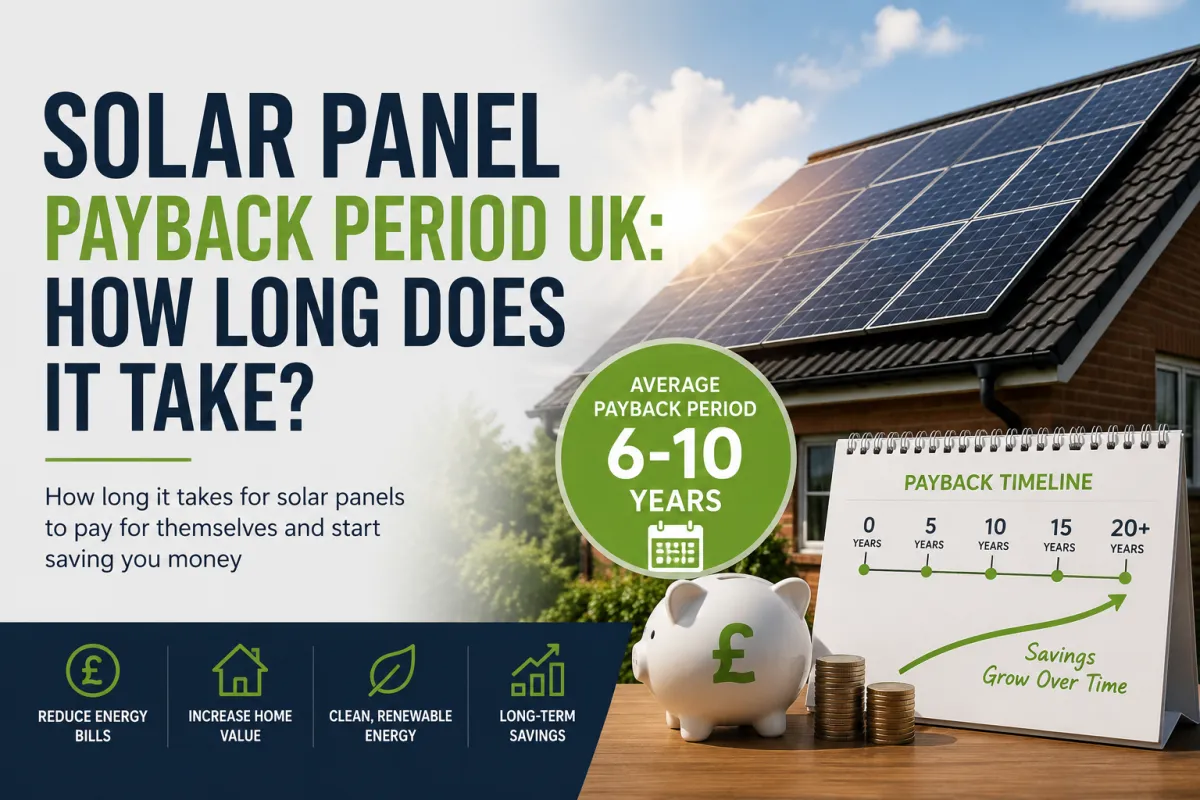
Solar Panel Payback Period UK: How Long Does It Take?
Solar Information - Generating Energy
Solar Panel Payback Period UK: How Long Does It Take?
With energy prices continuing to fluctuate across the UK, more homeowners are asking the same question: how long does it actually take for solar panels to pay for themselves?
The solar panel payback period is one of the most important factors when deciding whether to invest in renewable energy. It determines how quickly your system starts saving you money rather than simply recovering its upfront cost.
In this guide, we’ll break down exactly how long solar panels take to pay back in the UK, what affects the payback period, and how you can reduce it.
What Is the Solar Payback Period?
The solar panel payback period is the length of time it takes for the savings generated by your solar system to equal the initial installation cost.
In simple terms:
Payback period = Total system cost ÷ annual savings
Once you’ve reached this point, your electricity savings are essentially profit for the remaining lifespan of the system — which is typically 25+ years.
Average Solar Panel Payback Period in the UK (2026)
In the UK, the average solar panel payback period currently sits between:
👉 6 to 10 years
However, this can vary significantly depending on several factors including system size, electricity usage, location, and whether battery storage is included.
After the payback period, homeowners can often enjoy 15–20 years of reduced or near-free electricity bills.
What Affects Solar Payback Time?
There is no fixed answer because every property is different. Here are the main factors that influence how quickly your system pays for itself:
1. Electricity Prices
One of the biggest drivers of solar savings is the cost of grid electricity.
When electricity prices rise, solar becomes more valuable because every unit of energy you generate saves you more money.
For example:
At 20p per kWh → slower payback
At 30–35p per kWh → much faster payback
This is why payback periods in the UK have actually improved in recent years despite higher installation costs.
2. System Size
A larger system generally produces more electricity, but it also costs more upfront.
The key is balance:
Small system = lower cost, lower savings
Large system = higher cost, higher long-term savings
The best payback usually comes from correctly sizing the system to your household usage rather than oversizing.
3. Self-Consumption Rate
This is how much of your solar energy you actually use in your home instead of exporting it to the grid.
High self-consumption = faster payback
Low self-consumption = slower payback
For example:
If you are home during the day, you’ll naturally use more solar energy directly, improving savings.
Adding battery storage can significantly improve this (we’ll cover that shortly).
4. Battery Storage
Adding a battery can improve your payback period depending on usage patterns.
A battery allows you to:
Store excess daytime energy
Use it in the evening when electricity is expensive
Reduce grid reliance further
While batteries increase upfront cost, they often:
Increase self-consumption from ~30% to 70–90%
Improve long-term savings
Protect against future electricity price rises
In many UK homes, batteries are now becoming a key part of achieving the best financial return.
5. Export Tariffs (Selling Back to the Grid)
When your solar system generates more electricity than you use, you can export it back to the grid through schemes like the Smart Export Guarantee (SEG).
Rates vary by supplier but typically range from:
4p to 15p per kWh exported
While export payments help, they are usually lower than the cost of importing electricity — meaning self-consumption is still more valuable.
6. Installation Quality and System Efficiency
Not all solar installations perform the same.
Factors such as:
Panel efficiency
Roof orientation
Shading
Inverter quality
Cable losses
all affect total system output.
A well-designed system from a reputable installer will always achieve a faster payback than a poorly planned one, even if both systems cost the same upfront.
Example Payback Calculation (Typical UK Home)
Let’s look at a realistic example:
System:
4kW solar PV system
Installed cost: £7,000
Annual savings: £900–£1,200
Payback period:
£7,000 ÷ £1,000 average savings = 7 years
After 7 years:
The system has paid for itself
The homeowner continues saving ~£1,000 per year
Over 25 years, total savings could exceed £20,000+
Do Solar Panels Increase Home Value?
Yes — solar panels can increase property value in the UK.
Buyers are increasingly looking for energy-efficient homes due to rising bills. A solar-equipped home often stands out because:
Lower monthly running costs
Improved Energy Performance Certificate (EPC) rating
Long-term energy security
While the exact value increase varies, many estate agents estimate a potential uplift of 3–5% in property value, depending on system size and savings.
How to Reduce Your Payback Period
If your goal is to get the fastest return on investment, here are key strategies:
✔ Use more electricity during the day
Run appliances like washing machines and dishwashers when the sun is shining.
✔ Add battery storage
Store excess energy instead of exporting it cheaply.
✔ Choose the right system size
Bigger isn’t always better — correct sizing is key.
✔ Improve energy efficiency first
Better insulation and efficient appliances reduce overall demand.
✔ Work with a professional installer
System design has a major impact on long-term performance.
Common Misconceptions About Solar Payback
❌ “Solar takes 15–20 years to pay back”
This was true years ago, but not anymore. UK systems now typically pay back in 6–10 years.
❌ “Solar only works in summer”
Solar panels generate electricity year-round. While output is lower in winter, systems still produce meaningful energy even on cloudy days.
❌ “Batteries always slow down payback”
Not necessarily. While they add cost, they can significantly increase savings depending on usage habits and energy tariffs.
Is Solar Still Worth It in 2026?
Yes, for most UK households, solar remains one of the most reliable long-term investments for reducing energy bills.
Even with installation costs, the combination of:
Rising energy prices
Improved panel efficiency
Export tariffs
Battery technology
means solar remains financially attractive.
The key is ensuring the system is designed correctly for your home rather than using a one-size-fits-all approach.
Final Thoughts
The average solar panel payback period in the UK sits around 6 to 10 years, but the exact figure depends heavily on your usage, system design, and whether you include battery storage.
After that point, solar becomes a long-term financial benefit, often delivering well over a decade of reduced energy bills.
If you’re considering solar for your home, getting a properly designed system is the most important step in ensuring a strong return on investment.

Solar Panel Payback Period UK: How Long Does It Take?
Solar Information - Generating Energy
Solar Panel Payback Period UK: How Long Does It Take?
With energy prices continuing to fluctuate across the UK, more homeowners are asking the same question: how long does it actually take for solar panels to pay for themselves?
The solar panel payback period is one of the most important factors when deciding whether to invest in renewable energy. It determines how quickly your system starts saving you money rather than simply recovering its upfront cost.
In this guide, we’ll break down exactly how long solar panels take to pay back in the UK, what affects the payback period, and how you can reduce it.
What Is the Solar Payback Period?
The solar panel payback period is the length of time it takes for the savings generated by your solar system to equal the initial installation cost.
In simple terms:
Payback period = Total system cost ÷ annual savings
Once you’ve reached this point, your electricity savings are essentially profit for the remaining lifespan of the system — which is typically 25+ years.
Average Solar Panel Payback Period in the UK (2026)
In the UK, the average solar panel payback period currently sits between:
👉 6 to 10 years
However, this can vary significantly depending on several factors including system size, electricity usage, location, and whether battery storage is included.
After the payback period, homeowners can often enjoy 15–20 years of reduced or near-free electricity bills.
What Affects Solar Payback Time?
There is no fixed answer because every property is different. Here are the main factors that influence how quickly your system pays for itself:
1. Electricity Prices
One of the biggest drivers of solar savings is the cost of grid electricity.
When electricity prices rise, solar becomes more valuable because every unit of energy you generate saves you more money.
For example:
At 20p per kWh → slower payback
At 30–35p per kWh → much faster payback
This is why payback periods in the UK have actually improved in recent years despite higher installation costs.
2. System Size
A larger system generally produces more electricity, but it also costs more upfront.
The key is balance:
Small system = lower cost, lower savings
Large system = higher cost, higher long-term savings
The best payback usually comes from correctly sizing the system to your household usage rather than oversizing.
3. Self-Consumption Rate
This is how much of your solar energy you actually use in your home instead of exporting it to the grid.
High self-consumption = faster payback
Low self-consumption = slower payback
For example:
If you are home during the day, you’ll naturally use more solar energy directly, improving savings.
Adding battery storage can significantly improve this (we’ll cover that shortly).
4. Battery Storage
Adding a battery can improve your payback period depending on usage patterns.
A battery allows you to:
Store excess daytime energy
Use it in the evening when electricity is expensive
Reduce grid reliance further
While batteries increase upfront cost, they often:
Increase self-consumption from ~30% to 70–90%
Improve long-term savings
Protect against future electricity price rises
In many UK homes, batteries are now becoming a key part of achieving the best financial return.
5. Export Tariffs (Selling Back to the Grid)
When your solar system generates more electricity than you use, you can export it back to the grid through schemes like the Smart Export Guarantee (SEG).
Rates vary by supplier but typically range from:
4p to 15p per kWh exported
While export payments help, they are usually lower than the cost of importing electricity — meaning self-consumption is still more valuable.
6. Installation Quality and System Efficiency
Not all solar installations perform the same.
Factors such as:
Panel efficiency
Roof orientation
Shading
Inverter quality
Cable losses
all affect total system output.
A well-designed system from a reputable installer will always achieve a faster payback than a poorly planned one, even if both systems cost the same upfront.
Example Payback Calculation (Typical UK Home)
Let’s look at a realistic example:
System:
4kW solar PV system
Installed cost: £7,000
Annual savings: £900–£1,200
Payback period:
£7,000 ÷ £1,000 average savings = 7 years
After 7 years:
The system has paid for itself
The homeowner continues saving ~£1,000 per year
Over 25 years, total savings could exceed £20,000+
Do Solar Panels Increase Home Value?
Yes — solar panels can increase property value in the UK.
Buyers are increasingly looking for energy-efficient homes due to rising bills. A solar-equipped home often stands out because:
Lower monthly running costs
Improved Energy Performance Certificate (EPC) rating
Long-term energy security
While the exact value increase varies, many estate agents estimate a potential uplift of 3–5% in property value, depending on system size and savings.
How to Reduce Your Payback Period
If your goal is to get the fastest return on investment, here are key strategies:
✔ Use more electricity during the day
Run appliances like washing machines and dishwashers when the sun is shining.
✔ Add battery storage
Store excess energy instead of exporting it cheaply.
✔ Choose the right system size
Bigger isn’t always better — correct sizing is key.
✔ Improve energy efficiency first
Better insulation and efficient appliances reduce overall demand.
✔ Work with a professional installer
System design has a major impact on long-term performance.
Common Misconceptions About Solar Payback
❌ “Solar takes 15–20 years to pay back”
This was true years ago, but not anymore. UK systems now typically pay back in 6–10 years.
❌ “Solar only works in summer”
Solar panels generate electricity year-round. While output is lower in winter, systems still produce meaningful energy even on cloudy days.
❌ “Batteries always slow down payback”
Not necessarily. While they add cost, they can significantly increase savings depending on usage habits and energy tariffs.
Is Solar Still Worth It in 2026?
Yes, for most UK households, solar remains one of the most reliable long-term investments for reducing energy bills.
Even with installation costs, the combination of:
Rising energy prices
Improved panel efficiency
Export tariffs
Battery technology
means solar remains financially attractive.
The key is ensuring the system is designed correctly for your home rather than using a one-size-fits-all approach.
Final Thoughts
The average solar panel payback period in the UK sits around 6 to 10 years, but the exact figure depends heavily on your usage, system design, and whether you include battery storage.
After that point, solar becomes a long-term financial benefit, often delivering well over a decade of reduced energy bills.
If you’re considering solar for your home, getting a properly designed system is the most important step in ensuring a strong return on investment.

Contact Us
Generating Energy Ltd


© Copyright 2026. Generating Energy UK. All Rights Reserved.
Powered By: