
Blogs
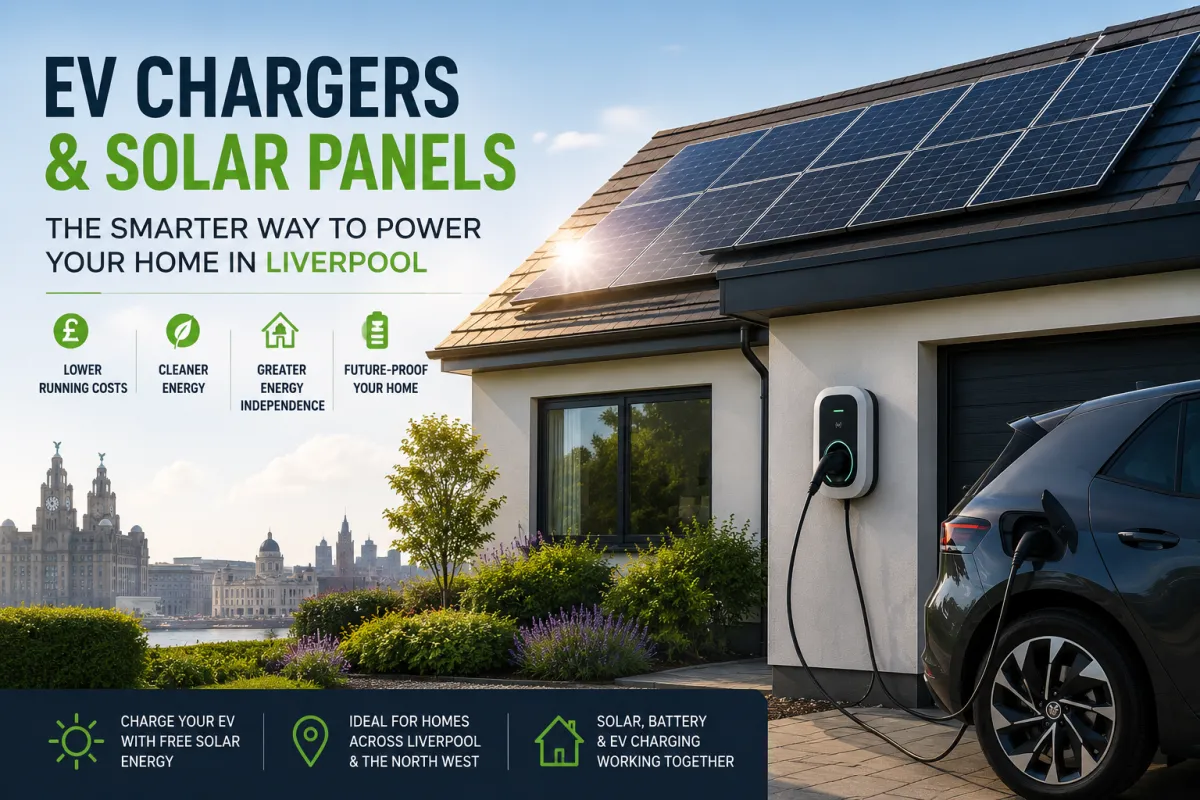
Why EV Chargers and Solar Panels Are the Perfect Match for Liverpool Homeowners
Solar Information - Generating Energy
Why EV Chargers and Solar Panels Are the Perfect Match for Liverpool Homeowners
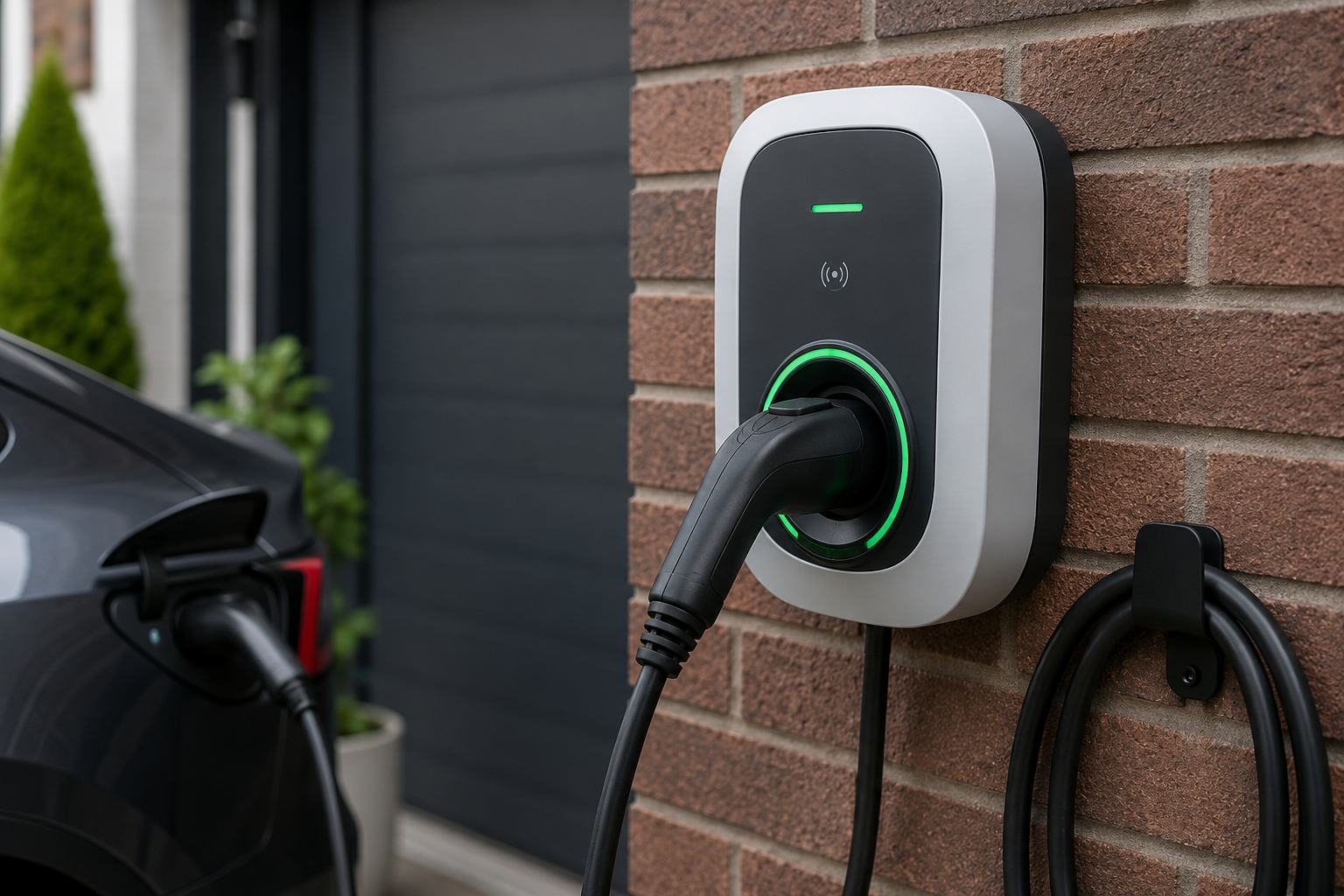
With electric vehicle ownership growing across Liverpool and the North West, many homeowners are looking for ways to reduce charging costs. Pairing a home EV charger with a solar panel system is one of the most effective ways to lower your electricity bills while making the most of the renewable energy generated on your roof.
In this guide, we'll explain why solar panels and EV chargers work so well together and how Liverpool homeowners can benefit from installing both.
Why EV Charging Costs Are Increasing
Although charging an electric vehicle is generally cheaper than filling up with petrol or diesel, electricity prices have increased significantly over recent years.
Many EV owners are now looking for ways to reduce their charging costs and gain more control over their energy usage.
This is where solar power comes in.
How Solar Panels Can Charge Your Electric Vehicle
Your solar panels generate electricity throughout the day. Instead of exporting all of this energy back to the grid, surplus power can be diverted directly into your electric vehicle through a compatible smart EV charger.
This means your car can be charged using free renewable energy generated from your own roof.
The Benefits of Combining Solar Panels and an EV Charger
Lower Charging Costs
Charging directly from solar can significantly reduce the amount of electricity purchased from your supplier.
Better Return on Your Solar Investment
Instead of exporting excess electricity for a relatively small payment, you're using that energy to power your vehicle.
Reduced Carbon Footprint
Solar energy is renewable and helps reduce reliance on fossil fuels.
Future-Proofing Your Home
As EV ownership continues to rise, having a dedicated charger installed can make your property more attractive to future buyers.
What About Battery Storage?
Battery storage can further enhance the benefits of a solar and EV charger installation.
A battery allows you to:
Store excess solar energy during the day.
Charge your vehicle during the evening.
Take advantage of cheaper off-peak electricity tariffs.
Increase self-consumption of solar energy.
For many Liverpool homeowners, solar panels, battery storage and an EV charger create a complete home energy solution.
Choosing the Right EV Charger
Not all chargers offer solar integration.
Smart chargers can:
Detect excess solar generation.
Automatically prioritise solar charging.
Switch between grid and solar power when needed.
Be controlled through a mobile app.
When selecting an EV charger, it's important to ensure it's compatible with both your vehicle and your solar system.
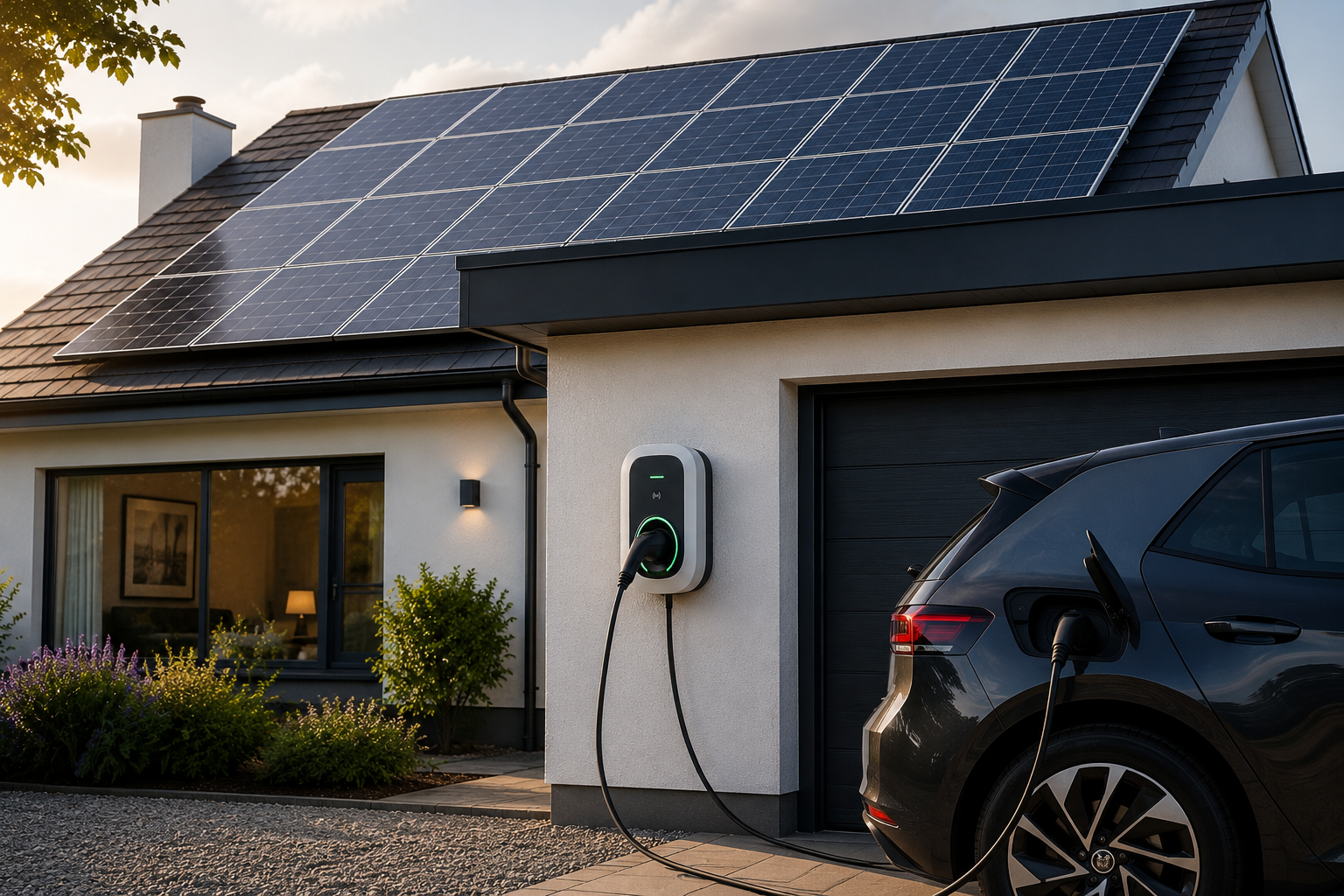
Is Liverpool a Good Location for Solar-Powered EV Charging?
Absolutely.
While Liverpool may not enjoy Mediterranean sunshine, modern solar panels are highly efficient and continue generating electricity even on cloudy days.
Many homeowners across Liverpool, Wirral, St Helens, Southport and surrounding areas generate enough solar energy to make a noticeable impact on their EV charging costs throughout the year.
A typical Liverpool household with:
10–12 solar panels
A 5–10kWh battery
A smart EV charger
could generate thousands of miles of driving each year using solar energy that would otherwise have been exported to the grid.
Best Times to Charge an EV with Solar
Explain that charging at midday generally captures the most solar generation.
You could discuss:
Spring and summer charging.
Scheduling charging through smart apps.
Avoiding importing electricity during expensive periods.
Common Myths About Solar EV Charging
Myth 1: Liverpool Doesn't Get Enough Sun
Modern panels generate electricity from daylight, not just direct sunshine.
Myth 2: You Need a Huge Solar System
Many homeowners can offset a significant amount of EV charging with a modest installation.
Myth 3: EV Chargers Damage Your Battery
Modern vehicles are designed to handle regular charging safely.
Can You Charge an EV During a Power Cut?
One of the most common misconceptions about solar panels is that they continue to power your home during a power cut. In reality, most standard solar installations automatically shut down when the grid goes offline.
This safety feature, known as anti-islanding protection, prevents electricity from being exported onto power lines while engineers may be carrying out repairs. As a result, even if the sun is shining and your solar panels are generating electricity, a typical grid-connected system will stop supplying power during an outage.
Where Battery Storage Changes Things
Battery storage systems can provide a solution, but not all batteries are capable of powering a home during a power cut.
Many battery systems are designed simply to store energy and reduce electricity bills. When the grid fails, these systems will also shut down alongside the solar inverter.
To maintain power during an outage, the battery system must be specifically designed with backup or EPS (Emergency Power Supply) functionality. This allows the system to safely disconnect from the grid and create its own local power network for the home.
Can You Charge Your EV Using Solar and a Battery During a Power Cut?
The answer is: it depends on the system design.
To charge an electric vehicle during a power cut, the following factors need to be considered:
The battery must support backup operation.
The inverter must be capable of operating independently from the grid.
The EV charger must be connected to the backed-up circuits.
The battery must have sufficient power output to handle the charging demand.
Many EV chargers can draw 7kW or more when charging at full speed. If the battery system or backup supply isn't sized appropriately, charging speeds may need to be reduced or charging may not be possible.
How Sigenergy Approaches Backup Power
Modern systems such as Sigenergy have been designed with whole-home backup capabilities in mind.
When configured correctly, a Sigenergy system can:
Automatically detect a grid outage.
Switch to backup mode in a matter of seconds.
Continue powering selected circuits or even the entire property.
Allow solar generation to continue charging the battery during daylight hours.
Provide power for essential appliances such as lighting, refrigeration, internet routers and heating controls.
Depending on the size of the installation, homeowners may also be able to continue charging their electric vehicle during an outage.
A Realistic Example
Imagine a sunny summer day in Liverpool. A local power outage affects your street, but your home is equipped with:
A solar PV system.
Battery storage with backup functionality.
A compatible EV charger.
Whole-home backup capability.
While neighbouring properties are without power, your solar panels continue generating electricity, your battery continues supplying the home, and you may even be able to add charge to your vehicle using energy produced from your roof.
This level of energy resilience is becoming increasingly attractive as homeowners look for greater independence from the grid.
The Bottom Line
If you're considering solar panels, battery storage and an EV charger, it's worth discussing backup power requirements from the outset. Not all battery systems offer this functionality as standard, and not all EV chargers can operate during a grid outage.
A properly designed system can do far more than simply reduce your electricity bills—it can keep your home running and potentially keep your electric vehicle charged when the grid goes down.
For many homeowners, that's one of the strongest arguments for combining solar, battery storage and smart EV charging into a single integrated energy system.
Conclusion
If you're considering solar panels or already have a solar system installed, adding an EV charger is one of the most effective ways to maximise your energy savings.
By using free electricity generated from your roof, you can reduce charging costs, lower your reliance on the grid and move closer to complete energy independence.
For homeowners across Liverpool and the North West, solar-powered EV charging is becoming an increasingly smart investment.

Why EV Chargers and Solar Panels Are the Perfect Match for Liverpool Homeowners
Solar Information - Generating Energy
Why EV Chargers and Solar Panels Are the Perfect Match for Liverpool Homeowners
With electric vehicle ownership growing across Liverpool and the North West, many homeowners are looking for ways to reduce charging costs. Pairing a home EV charger with a solar panel system is one of the most effective ways to lower your electricity bills while making the most of the renewable energy generated on your roof.
In this guide, we'll explain why solar panels and EV chargers work so well together and how Liverpool homeowners can benefit from installing both.
Why EV Charging Costs Are Increasing
Although charging an electric vehicle is generally cheaper than filling up with petrol or diesel, electricity prices have increased significantly over recent years.
Many EV owners are now looking for ways to reduce their charging costs and gain more control over their energy usage.
This is where solar power comes in.
How Solar Panels Can Charge Your Electric Vehicle
Your solar panels generate electricity throughout the day. Instead of exporting all of this energy back to the grid, surplus power can be diverted directly into your electric vehicle through a compatible smart EV charger.
This means your car can be charged using free renewable energy generated from your own roof.
The Benefits of Combining Solar Panels and an EV Charger
Lower Charging Costs
Charging directly from solar can significantly reduce the amount of electricity purchased from your supplier.
Better Return on Your Solar Investment
Instead of exporting excess electricity for a relatively small payment, you're using that energy to power your vehicle.
Reduced Carbon Footprint
Solar energy is renewable and helps reduce reliance on fossil fuels.
Future-Proofing Your Home
As EV ownership continues to rise, having a dedicated charger installed can make your property more attractive to future buyers.
What About Battery Storage?
Battery storage can further enhance the benefits of a solar and EV charger installation.
A battery allows you to:
Store excess solar energy during the day.
Charge your vehicle during the evening.
Take advantage of cheaper off-peak electricity tariffs.
Increase self-consumption of solar energy.
For many Liverpool homeowners, solar panels, battery storage and an EV charger create a complete home energy solution.
Choosing the Right EV Charger
Not all chargers offer solar integration.
Smart chargers can:
Detect excess solar generation.
Automatically prioritise solar charging.
Switch between grid and solar power when needed.
Be controlled through a mobile app.
When selecting an EV charger, it's important to ensure it's compatible with both your vehicle and your solar system.
Is Liverpool a Good Location for Solar-Powered EV Charging?
Absolutely.
While Liverpool may not enjoy Mediterranean sunshine, modern solar panels are highly efficient and continue generating electricity even on cloudy days.
Many homeowners across Liverpool, Wirral, St Helens, Southport and surrounding areas generate enough solar energy to make a noticeable impact on their EV charging costs throughout the year.
A typical Liverpool household with:
10–12 solar panels
A 5–10kWh battery
A smart EV charger
could generate thousands of miles of driving each year using solar energy that would otherwise have been exported to the grid.
Best Times to Charge an EV with Solar
Explain that charging at midday generally captures the most solar generation.
You could discuss:
Spring and summer charging.
Scheduling charging through smart apps.
Avoiding importing electricity during expensive periods.
Common Myths About Solar EV Charging
Myth 1: Liverpool Doesn't Get Enough Sun
Modern panels generate electricity from daylight, not just direct sunshine.
Myth 2: You Need a Huge Solar System
Many homeowners can offset a significant amount of EV charging with a modest installation.
Myth 3: EV Chargers Damage Your Battery
Modern vehicles are designed to handle regular charging safely.
Can You Charge an EV During a Power Cut?
One of the most common misconceptions about solar panels is that they continue to power your home during a power cut. In reality, most standard solar installations automatically shut down when the grid goes offline.
This safety feature, known as anti-islanding protection, prevents electricity from being exported onto power lines while engineers may be carrying out repairs. As a result, even if the sun is shining and your solar panels are generating electricity, a typical grid-connected system will stop supplying power during an outage.
Where Battery Storage Changes Things
Battery storage systems can provide a solution, but not all batteries are capable of powering a home during a power cut.
Many battery systems are designed simply to store energy and reduce electricity bills. When the grid fails, these systems will also shut down alongside the solar inverter.
To maintain power during an outage, the battery system must be specifically designed with backup or EPS (Emergency Power Supply) functionality. This allows the system to safely disconnect from the grid and create its own local power network for the home.
Can You Charge Your EV Using Solar and a Battery During a Power Cut?
The answer is: it depends on the system design.
To charge an electric vehicle during a power cut, the following factors need to be considered:
The battery must support backup operation.
The inverter must be capable of operating independently from the grid.
The EV charger must be connected to the backed-up circuits.
The battery must have sufficient power output to handle the charging demand.
Many EV chargers can draw 7kW or more when charging at full speed. If the battery system or backup supply isn't sized appropriately, charging speeds may need to be reduced or charging may not be possible.
How Sigenergy Approaches Backup Power
Modern systems such as Sigenergy have been designed with whole-home backup capabilities in mind.
When configured correctly, a Sigenergy system can:
Automatically detect a grid outage.
Switch to backup mode in a matter of seconds.
Continue powering selected circuits or even the entire property.
Allow solar generation to continue charging the battery during daylight hours.
Provide power for essential appliances such as lighting, refrigeration, internet routers and heating controls.
Depending on the size of the installation, homeowners may also be able to continue charging their electric vehicle during an outage.
A Realistic Example
Imagine a sunny summer day in Liverpool. A local power outage affects your street, but your home is equipped with:
A solar PV system.
Battery storage with backup functionality.
A compatible EV charger.
Whole-home backup capability.
While neighbouring properties are without power, your solar panels continue generating electricity, your battery continues supplying the home, and you may even be able to add charge to your vehicle using energy produced from your roof.
This level of energy resilience is becoming increasingly attractive as homeowners look for greater independence from the grid.
The Bottom Line
If you're considering solar panels, battery storage and an EV charger, it's worth discussing backup power requirements from the outset. Not all battery systems offer this functionality as standard, and not all EV chargers can operate during a grid outage.
A properly designed system can do far more than simply reduce your electricity bills—it can keep your home running and potentially keep your electric vehicle charged when the grid goes down.
For many homeowners, that's one of the strongest arguments for combining solar, battery storage and smart EV charging into a single integrated energy system.
Conclusion
If you're considering solar panels or already have a solar system installed, adding an EV charger is one of the most effective ways to maximise your energy savings.
By using free electricity generated from your roof, you can reduce charging costs, lower your reliance on the grid and move closer to complete energy independence.
For homeowners across Liverpool and the North West, solar-powered EV charging is becoming an increasingly smart investment.

Contact Us
Generating Energy Ltd


© Copyright 2026. Generating Energy UK. All Rights Reserved.
Powered By: