Blogs
Is Bird Protection Worth It for Solar Panels? (Bird Mesh vs Solar Skirt Explained)
Solar Information - Generating Energy
Is Bird Protection Worth It for Solar Panels? (Bird Mesh vs Solar Skirt Explained)
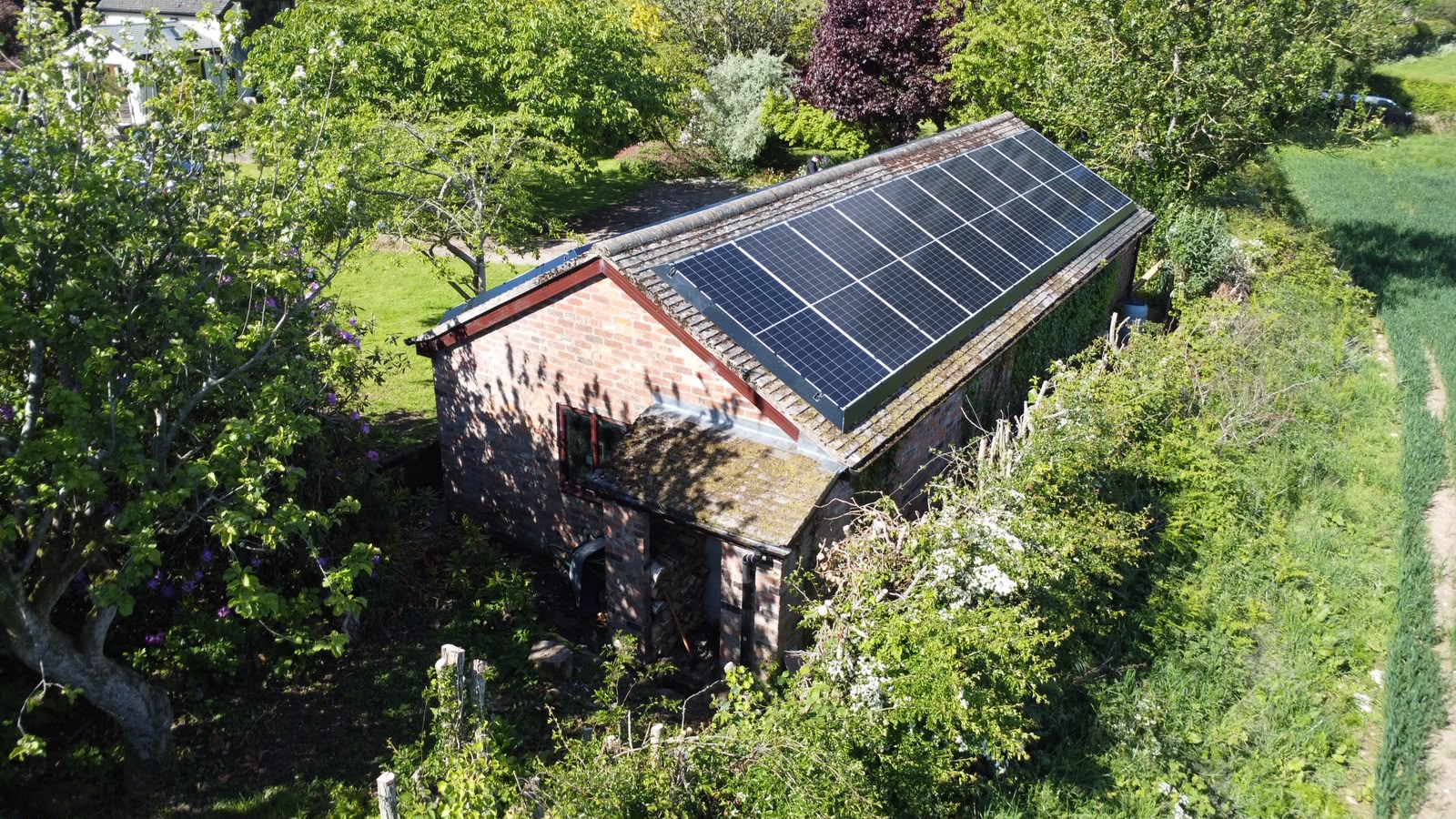
As solar adoption continues to rise across the UK, more homeowners are discovering an unexpected issue after installation: birds nesting under solar panels.
For companies like Generating Energy, working across Liverpool and the Northwest, this is becoming a regular conversation during aftercare and maintenance visits.
So the big question is: is bird protection actually worth it for solar panels?
The short answer is yes, in most cases it pays for itself in avoided damage, maintenance, and system efficiency loss. But the right solution depends on your roof, panel layout, and how early you install it.
Let’s break it down properly.
Why Birds Are a Problem for Solar Panels
Solar panels create a perfect sheltered space for birds, especially pigeons:
Warm, dry, protected from wind and rain
Safe from predators
High-up, quiet nesting areas
Easy access under tilted panels
Once birds move in, they don’t just “live quietly” there.
Common problems include:
Nest build-up blocking airflow under panels
Reduced panel efficiency due to overheating
Droppings coating panels (lower light absorption)
Blocked gutters and drainage systems
Chewed wiring in some cases
Fire risk from nesting material near electrical components
What starts as a small nesting spot can quickly turn into a maintenance headache.
Is Bird Protection Worth It?
In most residential solar installations, bird protection is worth it if installed early or within the first year.
Here’s why:
1. Prevention is cheaper than cleaning
Cleaning bird mess and removing nests is not just unpleasant, it requires scaffolding or roof access, which can cost more than preventative mesh installation.
2. System performance stays higher
Blocked airflow under panels can cause heat build-up. Solar panels perform less efficiently when they overheat.
3. Avoiding long-term roof damage
Bird droppings are acidic and can degrade roofing materials over time.
4. Reducing call-out costs
Without protection, repeat maintenance visits are common, especially in urban areas like Liverpool where pigeon populations are high.
Types of Bird Protection for Solar Panels
There are three main solutions used in the UK market:
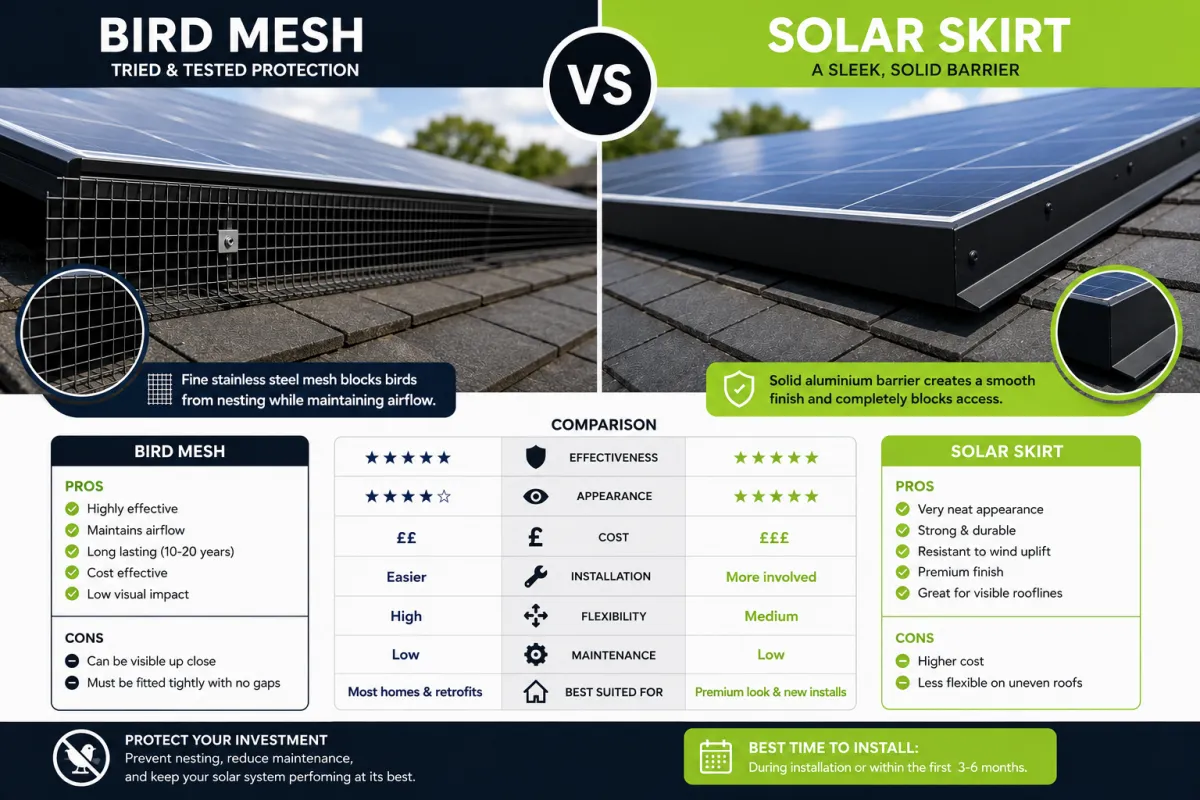
1. Bird Mesh (Most Common Solution)
Bird mesh is a stainless steel or UV-resistant mesh barrier fitted around the perimeter of the solar array.
solar panel bird mesh kit
How it works:
Mesh is clipped or fixed to the frame of the panels
It blocks access underneath the solar array
Maintains airflow while preventing entry
Pros:
Very effective when installed correctly
Long-lasting (often 10–20 years)
Doesn’t damage roof or panels
Low visual impact from ground level
Cons:
Needs professional installation
Poor installation can leave gaps (birds are persistent)
Slight upfront cost increase during install or retrofit
Best for:
Most residential solar systems
Areas with moderate to heavy pigeon activity
Long-term protection strategy
2. Solar Skirt (Aluminium or Polymer Trim)
A solar skirt is a rigid barrier system fitted around the edge of the panels, usually made from aluminium or strong UV-stable plastic.
solar panel skirt kit
How it works:
Creates a smooth vertical barrier around the array
Prevents birds from accessing the underside
Often used as a cleaner aesthetic alternative to mesh
Pros:
Very neat appearance
Strong physical barrier
Resistant to wind uplift and movement
Less visible “industrial” look than mesh
Cons:
Typically more expensive than mesh
Can trap debris if not designed well
Less flexible on uneven roof layouts
May require exact panel measurement fit
Best for:
High-end residential installations
Visible rooflines where aesthetics matter
New builds or planned solar systems
3. Spikes (Less Common for Solar Panels)
Bird spikes are more commonly used on ledges, chimneys, and gutters rather than directly on solar panels.
How they work:
Physical deterrent rather than full exclusion
Prevent birds from landing on edges
Pros:
Cheap
Easy to install
Cons:
Not suitable as a full solar solution
Doesn’t fully prevent nesting under panels
More of a deterrent than a barrier
Best for:
Supplementary protection
Gutters and roof edges alongside solar protection
When You Should Install Bird Protection
Timing matters more than most homeowners realise.
Best time:
During solar installation (ideal)
Within first 3–6 months after install
Still worth it later if:
Birds have started nesting
You notice droppings under panels
You hear scratching or movement on the roof
System output has dropped unexpectedly
If nests are already established, removal may be required before fitting protection.
What Happens If You Don’t Install It?
Some homeowners skip bird protection to save money upfront. That can work—but often leads to:
Annual cleaning costs
Reduced solar efficiency over time
Roof maintenance issues
Pest infestation under panels
Potential voiding of workmanship warranties in some cases
In bird-heavy areas like Liverpool and surrounding towns, it becomes more of a “when” problem than an “if.”
Is Bird Protection a Good Investment?
From a cost perspective, bird protection is usually:
Low upfront cost compared to system value
High return in avoided maintenance
One-time fix vs recurring cleaning costs
For most homeowners, especially those with 10–20 year solar goals, it’s a sensible addition rather than an optional extra.
Final Verdict
So, is bird protection worth it for solar panels?
Yes, almost always.
If you want long-term performance stability → install it
If you live in an urban pigeon-heavy area → definitely install it
If you want a low-maintenance solar system → it’s strongly recommended
Between bird mesh and solar skirts, mesh remains the most practical and widely used solution, while skirts offer a more premium finish for specific designs.
At Generating Energy, we regularly see systems without protection requiring avoidable cleaning and maintenance within just a few years—something that can usually be prevented from day one.

Is Bird Protection Worth It for Solar Panels? (Bird Mesh vs Solar Skirt Explained)
Solar Information - Generating Energy
Is Bird Protection Worth It for Solar Panels? (Bird Mesh vs Solar Skirt Explained)
As solar adoption continues to rise across the UK, more homeowners are discovering an unexpected issue after installation: birds nesting under solar panels.
For companies like Generating Energy, working across Liverpool and the Northwest, this is becoming a regular conversation during aftercare and maintenance visits.
So the big question is: is bird protection actually worth it for solar panels?
The short answer is yes, in most cases it pays for itself in avoided damage, maintenance, and system efficiency loss. But the right solution depends on your roof, panel layout, and how early you install it.
Let’s break it down properly.
Why Birds Are a Problem for Solar Panels
Solar panels create a perfect sheltered space for birds, especially pigeons:
Warm, dry, protected from wind and rain
Safe from predators
High-up, quiet nesting areas
Easy access under tilted panels
Once birds move in, they don’t just “live quietly” there.
Common problems include:
Nest build-up blocking airflow under panels
Reduced panel efficiency due to overheating
Droppings coating panels (lower light absorption)
Blocked gutters and drainage systems
Chewed wiring in some cases
Fire risk from nesting material near electrical components
What starts as a small nesting spot can quickly turn into a maintenance headache.
Is Bird Protection Worth It?
In most residential solar installations, bird protection is worth it if installed early or within the first year.
Here’s why:
1. Prevention is cheaper than cleaning
Cleaning bird mess and removing nests is not just unpleasant, it requires scaffolding or roof access, which can cost more than preventative mesh installation.
2. System performance stays higher
Blocked airflow under panels can cause heat build-up. Solar panels perform less efficiently when they overheat.
3. Avoiding long-term roof damage
Bird droppings are acidic and can degrade roofing materials over time.
4. Reducing call-out costs
Without protection, repeat maintenance visits are common, especially in urban areas like Liverpool where pigeon populations are high.
Types of Bird Protection for Solar Panels
There are three main solutions used in the UK market:
1. Bird Mesh (Most Common Solution)
Bird mesh is a stainless steel or UV-resistant mesh barrier fitted around the perimeter of the solar array.
solar panel bird mesh kit
How it works:
Mesh is clipped or fixed to the frame of the panels
It blocks access underneath the solar array
Maintains airflow while preventing entry
Pros:
Very effective when installed correctly
Long-lasting (often 10–20 years)
Doesn’t damage roof or panels
Low visual impact from ground level
Cons:
Needs professional installation
Poor installation can leave gaps (birds are persistent)
Slight upfront cost increase during install or retrofit
Best for:
Most residential solar systems
Areas with moderate to heavy pigeon activity
Long-term protection strategy
2. Solar Skirt (Aluminium or Polymer Trim)
A solar skirt is a rigid barrier system fitted around the edge of the panels, usually made from aluminium or strong UV-stable plastic.
solar panel skirt kit
How it works:
Creates a smooth vertical barrier around the array
Prevents birds from accessing the underside
Often used as a cleaner aesthetic alternative to mesh
Pros:
Very neat appearance
Strong physical barrier
Resistant to wind uplift and movement
Less visible “industrial” look than mesh
Cons:
Typically more expensive than mesh
Can trap debris if not designed well
Less flexible on uneven roof layouts
May require exact panel measurement fit
Best for:
High-end residential installations
Visible rooflines where aesthetics matter
New builds or planned solar systems
3. Spikes (Less Common for Solar Panels)
Bird spikes are more commonly used on ledges, chimneys, and gutters rather than directly on solar panels.
How they work:
Physical deterrent rather than full exclusion
Prevent birds from landing on edges
Pros:
Cheap
Easy to install
Cons:
Not suitable as a full solar solution
Doesn’t fully prevent nesting under panels
More of a deterrent than a barrier
Best for:
Supplementary protection
Gutters and roof edges alongside solar protection
When You Should Install Bird Protection
Timing matters more than most homeowners realise.
Best time:
During solar installation (ideal)
Within first 3–6 months after install
Still worth it later if:
Birds have started nesting
You notice droppings under panels
You hear scratching or movement on the roof
System output has dropped unexpectedly
If nests are already established, removal may be required before fitting protection.
What Happens If You Don’t Install It?
Some homeowners skip bird protection to save money upfront. That can work—but often leads to:
Annual cleaning costs
Reduced solar efficiency over time
Roof maintenance issues
Pest infestation under panels
Potential voiding of workmanship warranties in some cases
In bird-heavy areas like Liverpool and surrounding towns, it becomes more of a “when” problem than an “if.”
Is Bird Protection a Good Investment?
From a cost perspective, bird protection is usually:
Low upfront cost compared to system value
High return in avoided maintenance
One-time fix vs recurring cleaning costs
For most homeowners, especially those with 10–20 year solar goals, it’s a sensible addition rather than an optional extra.
Final Verdict
So, is bird protection worth it for solar panels?
Yes, almost always.
If you want long-term performance stability → install it
If you live in an urban pigeon-heavy area → definitely install it
If you want a low-maintenance solar system → it’s strongly recommended
Between bird mesh and solar skirts, mesh remains the most practical and widely used solution, while skirts offer a more premium finish for specific designs.
At Generating Energy, we regularly see systems without protection requiring avoidable cleaning and maintenance within just a few years—something that can usually be prevented from day one.
Contact Us
Generating Energy Ltd


© Copyright 2026. Generating Energy UK. All Rights Reserved.
Powered By: